Other Structures
MFA Thesis Exhibition, Fine Art Gallery of San Francisco State University, 2023
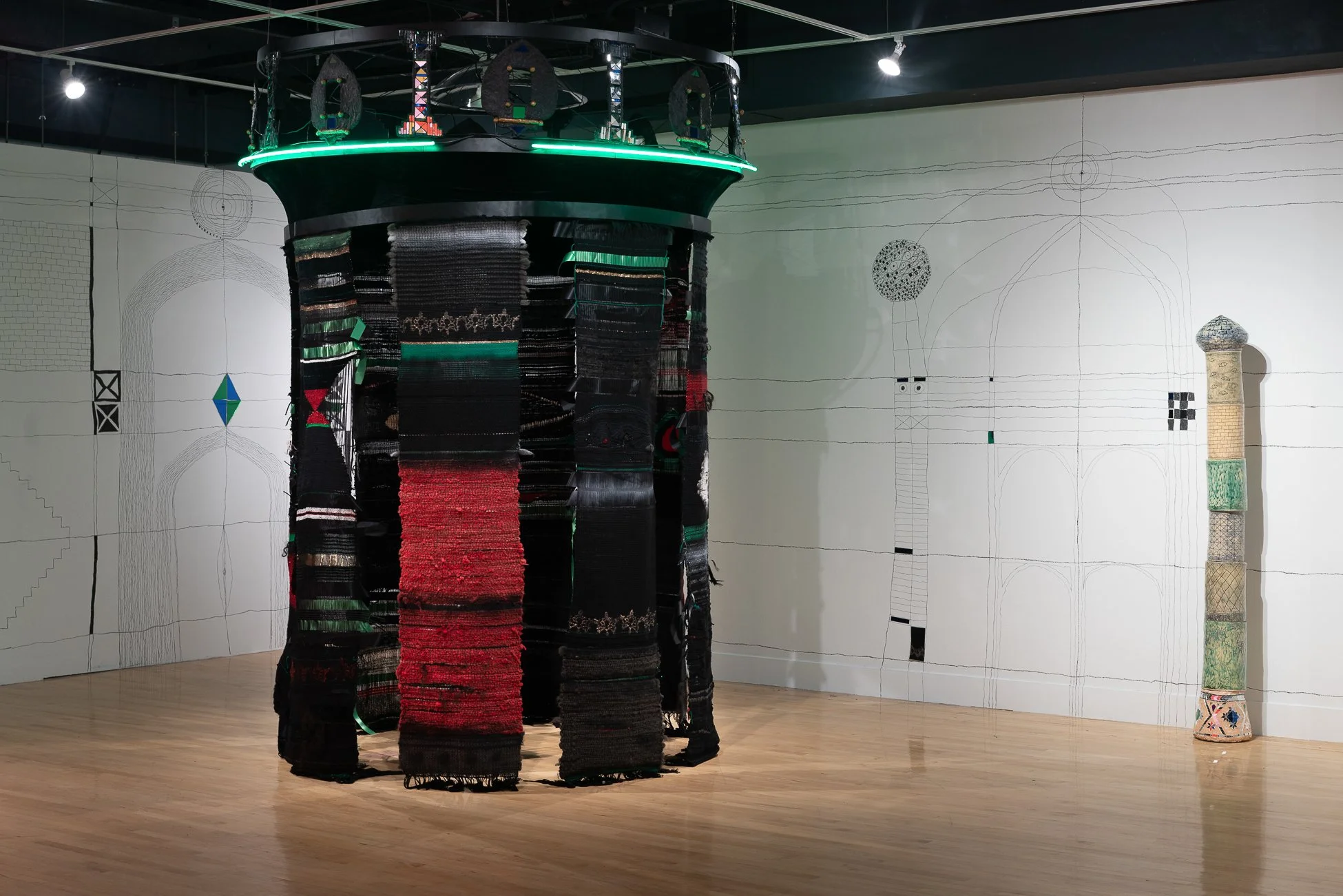
Siyah chador is Persian for “black tent," a nomadic dwelling constructed from goat hair. Traditionally, the goat hair is sheared by men and then woven into a home by women. In a nomadic life your shelter must be packable. It must be able to be taken down and erected while keeping its structural integrity; its reuse is as vital to one's survival as is traveling in a pack, ensuring safety in numbers and protection from the elements. The siyah chador is a home unbound, on the same journey as the traveler.
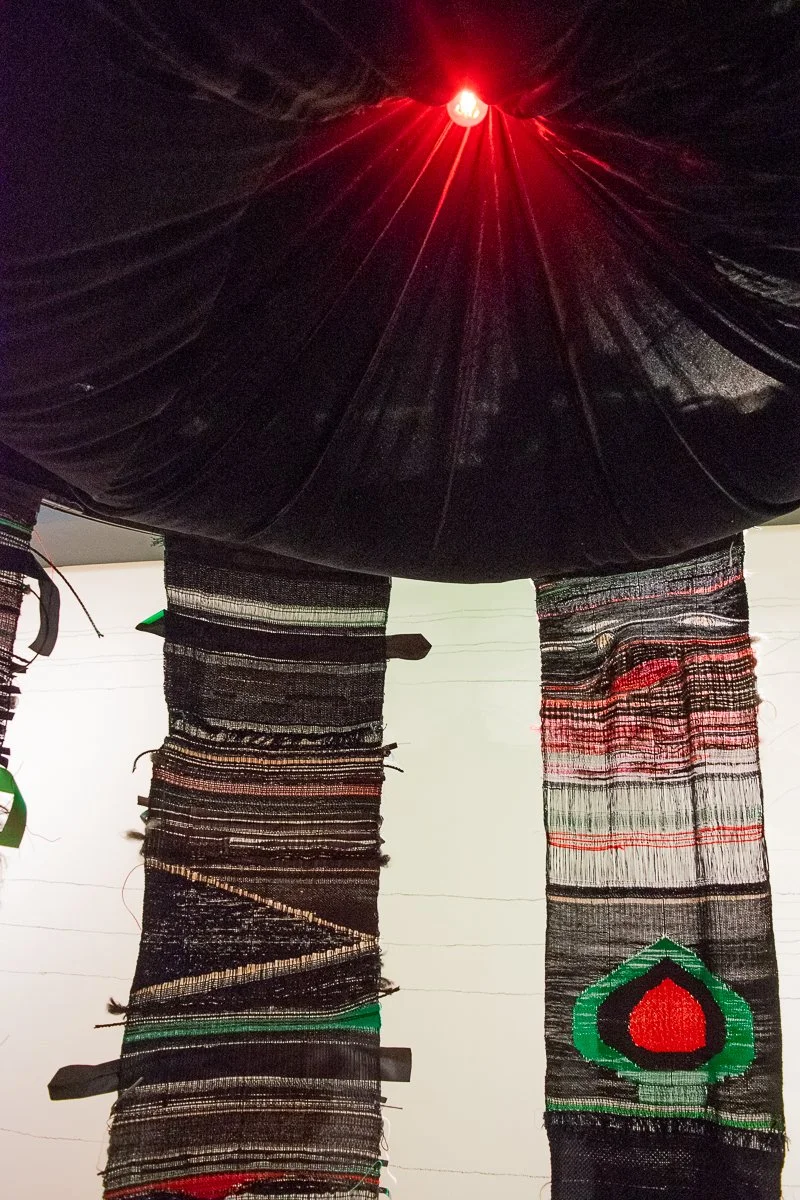
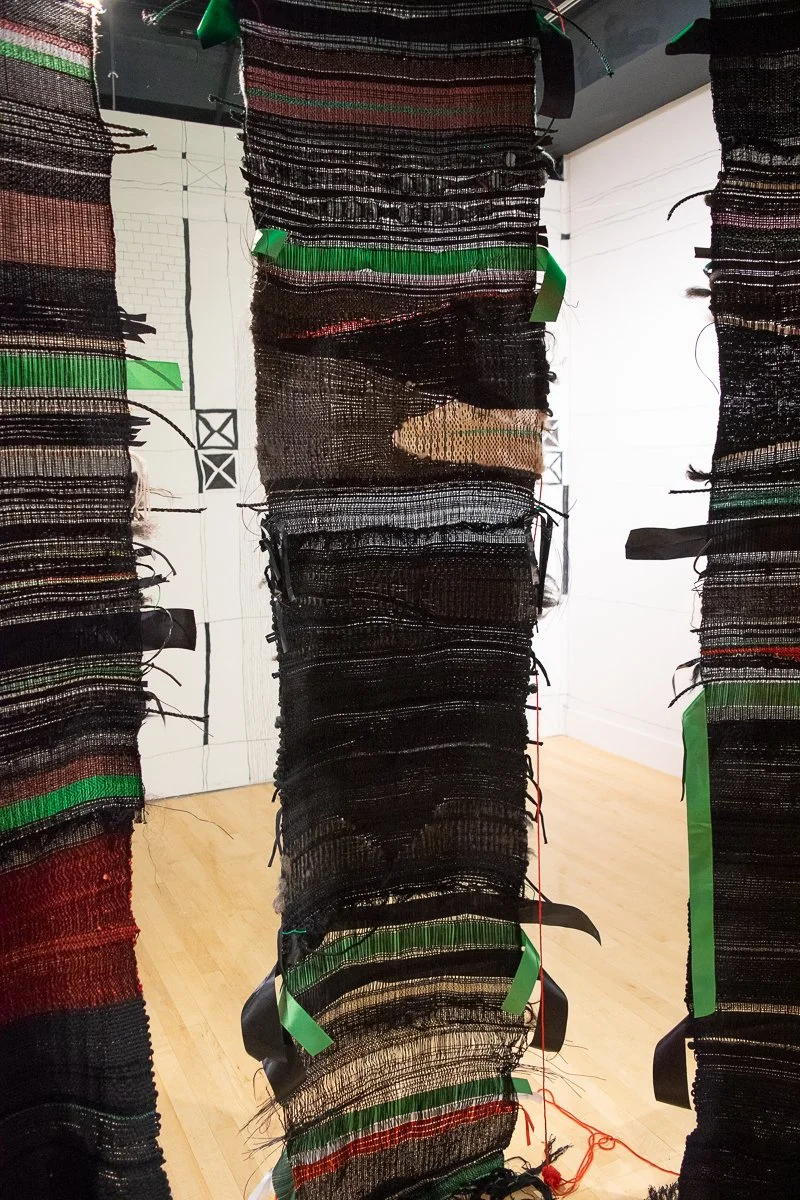
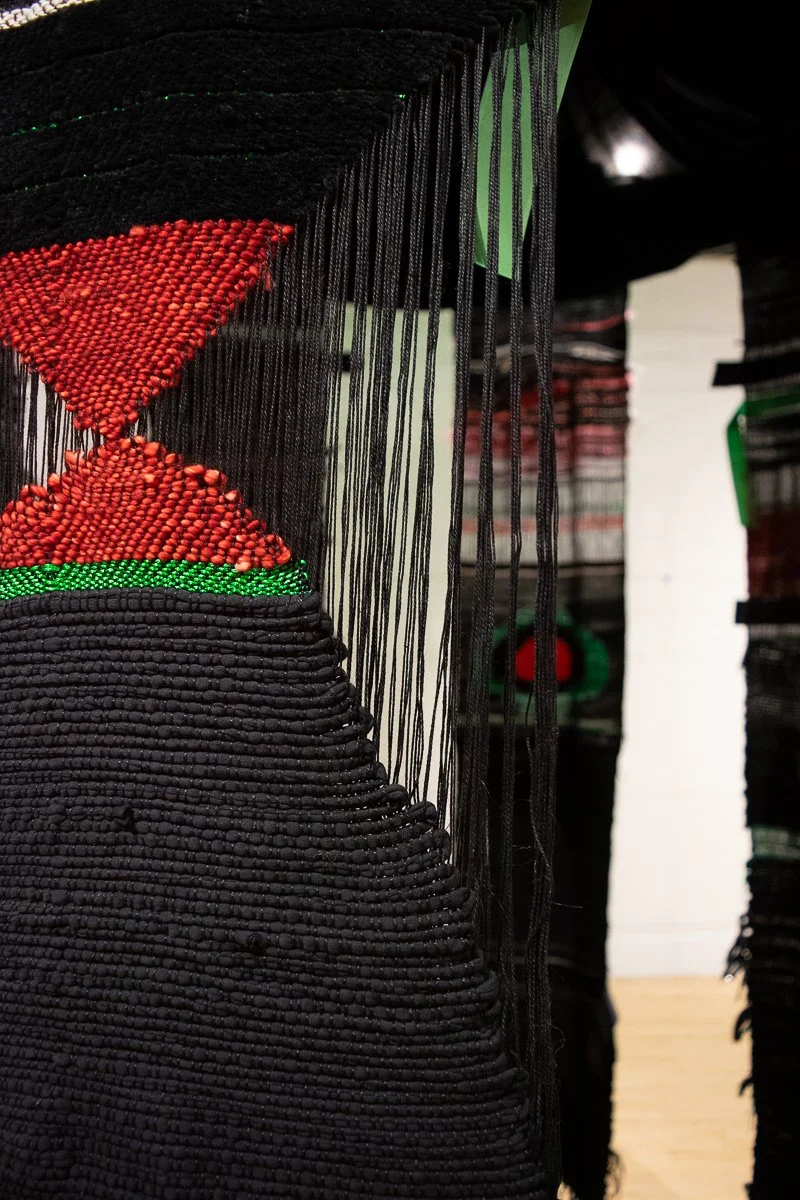
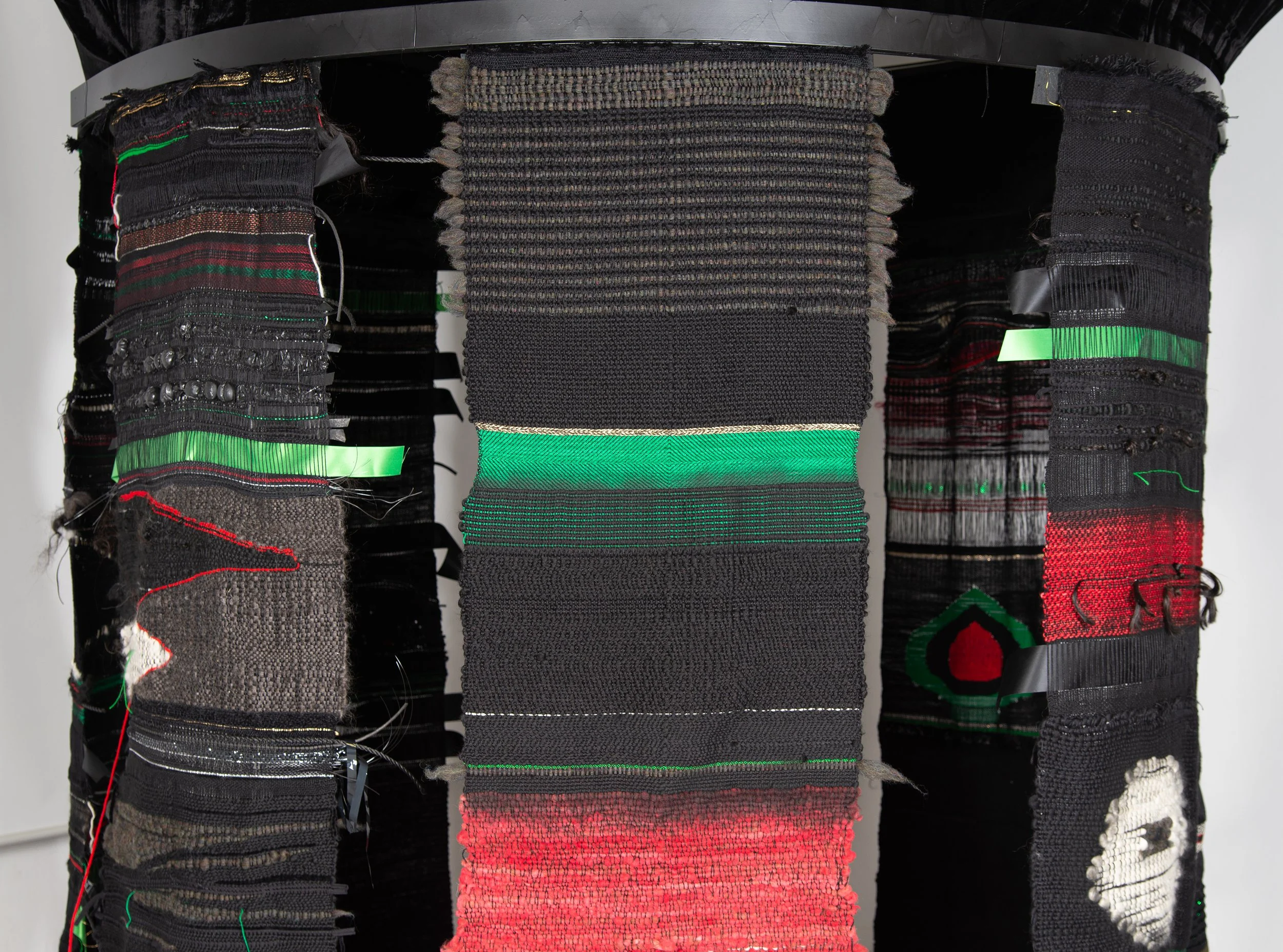
Sanaz Safanasab uses inspiration from this structure to create a space for mourning, an emotional landscape typically traversed in private or solitude. The installation Hejleh, the Persian word for “chamber,” is a six paneled canopy woven from green, red, white, and black fiber, including the artist's hair. The colors, except for black, are signifiers of the Iranian flag. The artist’s dark hair is sometimes pronounced, surrounded by red with strands breaking away from the textile, or barely legible as it camouflages into black. Taking on the same task as the women weavers who fabricate the siyah chador, Safanasab enacts an ancestral ritual not just in the making, but in the spiritual labor it takes to hold her own grief and that of others. Hejleh is meant to be a site for a communal and visceral processing.
Originally from Iran, the artist pulls from her experiences as an immigrant, the effects of displacement, personal loss and grief layered with the realities of distance from one’s family, yearning for a home that is perilous, and a solemn recognition of how this distance can underscore the limits of one’s power to clasp the source of affliction.
The 40+ years of gender apartheid in Iran under the Islamic Republic have recently culminated in prodigious uprisings by women-led protests across the country, out of anger and grief, over the murders and abuse of women committing what are considered crimes of morality. These “crimes” include not wearing a hijab and immodest dress. From afar, the artist witnesses the public process of collective rage and mourning. The action of cutting off her own hair (what has become an act of solidarity and protest among Iranian women) to weave into a dwelling for the most fraught and overwhelming of emotions, overturns cultural norms and creates a refuge for navigating and wailing through losses that are personal, political, and communal.
A stacking of ceramic cylinders creates Minaret, a rendering of a tower belonging to a mosque from which the call to prayer is cast. Sections of Miranet sit ajar in its assembly, precarious and threatening to slip into collapse. The space inside Hejleh slowly fills with an oriental rhythm of percussion and echoing wails that increase in disorder and volume, as if trying to project past the limits that sound can travel, longing to be heard on a land the body cannot go.
Essay by Dionne Lee